FREE MEASUREMENT TRUST AUDIT
Find where your website’s measurement stops being trustworthy
We inspect your public website in real US and EU browser sessions, inventory the tracking stack, test consent and conversion behavior, and email you a scored PDF with the order to fix the gaps.
Audit my tracking
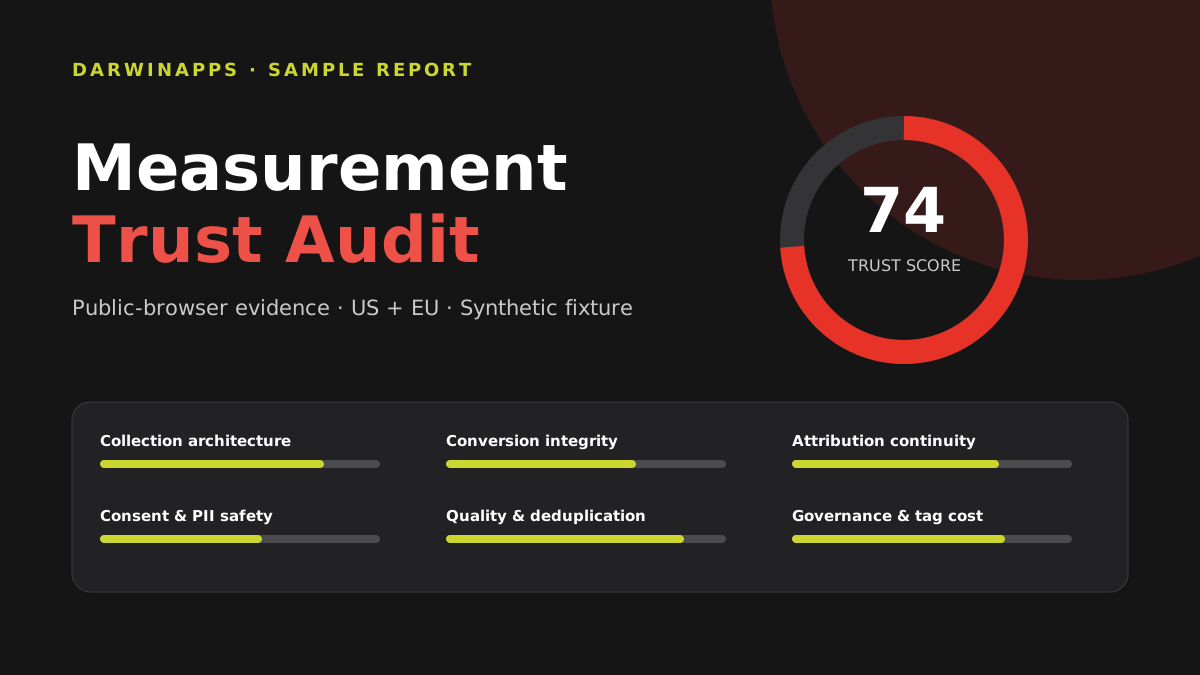
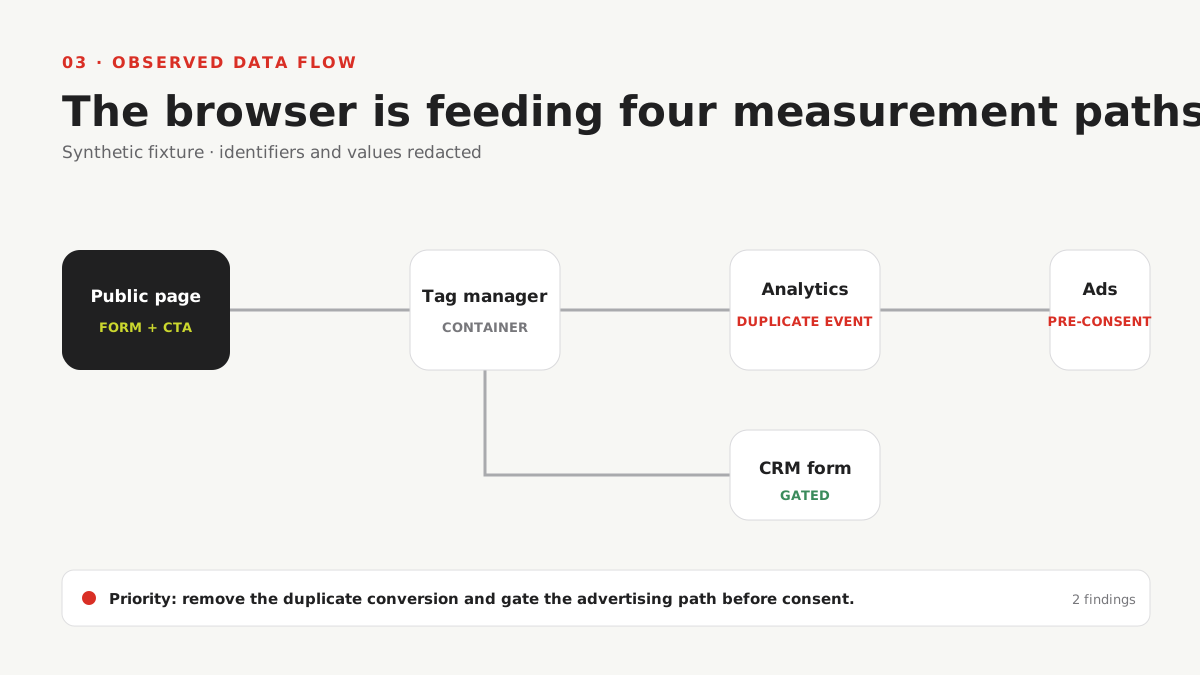
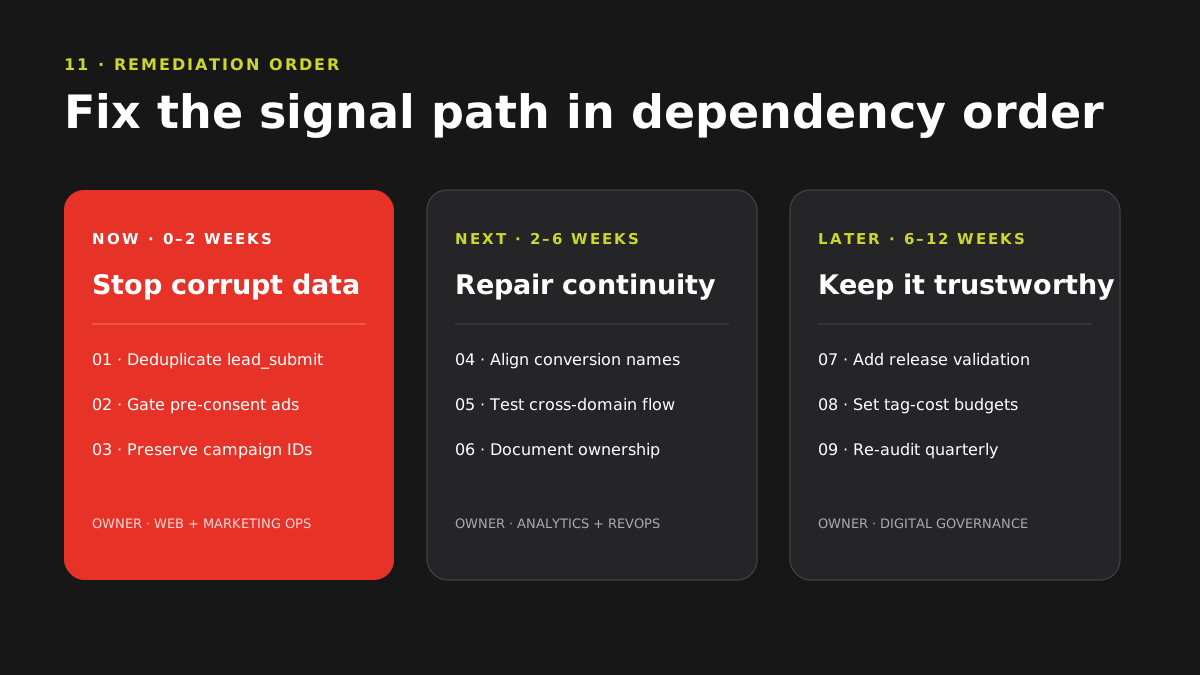
Sample report pages: Measurement Trust Score, browser-to-vendor data flow, consent and PII risks, and the Now–Next–Later roadmap.
- Up to 30
- public pages discovered
- Up to 5
- browser-tested pages
- US + EU
- regional evidence
- 6
- trust dimensions
DarwinApps has delivered 200+ digital projects and holds a 4.9/5 Clutch rating.
THE DECISION GAP
Why can every dashboard look right while the underlying signals disagree?
A conversion can fire twice, disappear during a cross-domain handoff, arrive without campaign context, or load before consent. The dashboard still produces a number.
Then analytics, ad platforms, CRM, and finance each defend a different version of acquisition—and every budget decision starts with an argument about whose data is real.
The Darwin Measurement Trust audit traces the public signal path, inventories what actually fires, scores six dimensions of trust, and puts the fixes in dependency order.
THREE STEPS
How does the free Measurement Trust audit work?
- 01
Enter your public website
Send your contact name, work email, and website, then confirm the request from your inbox.
- 02
We observe real browser behavior
The audit loads representative public pages from US and EU browser contexts and records the tracking, consent, storage, form, and conversion behavior that can be verified without a login.
- 03
Use the PDF to restore trust
We email the exact score, evidence, strengths, priority findings, and a Now–Next–Later roadmap with owners and validation steps.
01 · Tracking inventory and data flow
See the measurement stack as one data flow
The report inventories analytics, advertising, consent, session-replay, CRM, experimentation, and other observed vendors, then maps how the browser connects to them instead of treating every tag as an isolated installation.
02 · Conversion coverage and duplicates
Find conversions that vanish, multiply, or conflict
Forms, calls to action, event names, destinations, and repeated requests reveal missing measurement, duplicate firing, conflicting implementations, and signals that cannot support a defensible conversion count.
03 · Attribution continuity
Trace the handoffs that attribution depends on
Campaign parameters, cross-domain navigation, click identifiers, referral behavior, and public form handoffs show where acquisition context survives and where it is likely to break before the private reporting layer.
04 · Consent and PII safety
Compare consent and PII behavior across regions
US and EU browser evidence records banner state, pre-consent requests, cookies, storage, identifiers, parameter names, and form destinations. Raw values are redacted; capability is kept separate from confirmed transmission.
05 · Governance and remediation
Put reliability and governance in the same backlog
Tag failures, console errors, latency, vendor overlap, ownership gaps, and validation steps close the report with a Now–Next–Later sequence instead of another disconnected tracking checklist.
IMPLEMENTATION PROOF
What changed when Cleo replaced fragmented attribution with one reporting system?
Darwin connected Cleo’s marketing and sales data, documented the reporting logic, automated the monthly output, and replaced an attribution platform that had not resolved the fragmentation underneath it.
Jenn BigdeliazariSenior Marketing Director · Cleo Communications
Read the Cleo marketing analytics case study- $50K
- annual savings
- 2 days
- saved each month
- ~70% → 90%
- reporting accuracy
- 1
- centralized reporting hub
These are client implementation results, not promised outcomes of the free public-browser audit.
SCOPE
What can a public-browser measurement audit prove?
It can verify what the public website and browser expose. It cannot see the private systems that receive or reinterpret those signals.
- No GA4, GTM, CRM, ad-platform, CMS, or server login.
- No form submission, authentication, checkout, or destructive interaction.
- No claim that a public signal arrived correctly in a private dashboard or revenue report.
- No legal determination about GDPR, ePrivacy, CCPA, or another privacy regime.
How much does the Measurement Trust audit cost?
The public-browser first pass is free. It requires no account, payment card, analytics login, tag-manager access, CRM access, or CMS access. You confirm the request by email, receive the PDF by email, and may receive one disclosed follow-up from Darwin about the findings.
QUESTIONS
Before you submit the site
Is the Measurement Trust audit really free?
Yes. The first pass costs nothing and requires no payment card or account. You provide a contact name, work email, and public website, then confirm the request by email. Darwin may follow up about the findings; newsletter signup is optional.
What systems can the audit detect?
The browser evidence can identify many public analytics, advertising, consent, session-replay, experimentation, CRM, chat, and data-enrichment vendors, along with tag-manager containers, cookies, storage, public event names, and network destinations. Detection depends on what the sampled public pages actually load.
Does the audit use a real browser?
Yes. Representative public pages are rendered in isolated browser sessions. The audit records browser-visible requests, storage, consent states, forms, errors, and signal behavior rather than relying only on static HTML or a list of installed scripts.
Why compare US and EU browser behavior?
Websites frequently route consent banners and tracking behavior by region. Recording the observed geography and comparing regional states helps distinguish a global implementation from a region-specific consent or wiring gap.
Will the report expose personal data?
The collector looks for risky parameter names, destinations, identifiers, storage, and form behavior while redacting raw values. The report separates confirmed transmission from capability or inference and does not print captured personal values.
Does this prove that GA4, ads, or CRM reporting is accurate?
No. A public-browser audit can test collection and handoffs visible before data enters private systems. It cannot inspect private processing, attribution settings, offline conversions, CRM lifecycle logic, or revenue reconciliation without access.
What does the Measurement Trust Score mean?
The deterministic 0–100 score covers collection architecture, conversion integrity, attribution continuity, consent and PII safety, data quality and deduplication, plus governance, resilience, and tag cost. Evidence confidence is reported separately so missing coverage never masquerades as a failing control.
When will the PDF arrive?
The audit begins after email confirmation and runs asynchronously because browser coverage and website behavior vary by domain. Darwin emails the secure report link when processing finishes. No fixed delivery time is promised.
How often can I audit the same website?
A domain can receive one Measurement Trust audit during a 30-day period. The same domain may still request a different free audit during that period. Per-email, per-IP, and daily limits protect the service from automated abuse.
FREE FIRST PASS
Put every tracking decision on one evidence trail
See what fires, what conflicts, what creates risk, and which dependency your team should fix first.
Audit my tracking Free. Real-browser public evidence. No analytics, tag-manager, CRM, or CMS access.This audit reads the Surface layer only. See how Darwin Flux fixes the whole system