
Quick Answer:
The best AI workflow automation tools for marketing ops in 2026 are Clay, Zapier, Make, Workato, HubSpot AI, Salesforce Agentforce, Marketo Engage, Mutiny, Hightouch, and Customer.io. Each addresses a specific bottleneck: lead enrichment, audience sync, campaign QA, sales handoff, or reporting automation. The right choice depends on your data stack, team size, and which workflows are creating the most friction.
TL;DR
- AI automation requires clean data. Tools fail when CRM records are incomplete, UTMs are inconsistent, or routing logic has not been validated. Fix the data layer first.
- Tool selection follows workflow priority. Lead routing, audience sync, campaign QA, reporting automation, and sales handoff each have different technical requirements.
- Reverse ETL changes how activation works. Platforms such as Hightouch sync warehouse data directly to CRMs and ad platforms without custom pipelines.
- Enterprise and mid-market have different needs. Workato and Salesforce Agentforce are built for governance and scale. Make, Zapier and Clay are faster to deploy for teams without dedicated engineering support.
- Implementation determines results. The same tool performs differently depending on how workflows are scoped, validated, and maintained.
Marketing operations teams are spending hours on work that should not require human attention: routing leads manually, pulling reports from disconnected dashboards, reconciling audience lists between platforms, and preparing data for sales handoffs. These are operational problems with a technical fix.
AI workflow automation tools address this directly. They connect your CRM, data warehouse, email platforms, and ad networks into a system that moves data and triggers actions without manual intervention. The result is faster lead response, cleaner records, and more time for work that requires judgment.
This guide covers the 10 tools that marketing ops leaders at US B2B SaaS companies are evaluating in 2026. Each entry covers what the tool does, where it fits in a marketing stack, and what implementation requirements to expect.
AI Automation Only Works When the Data Beneath It Is Clean
The difference between automation that holds and automation that breaks comes down to sequence. In Darwin Flux, that sequence has four layers. Surface is where data enters: forms, UTM parameters, conversion events captured at the source. Connections is where it moves: CRM to warehouse, warehouse to ad platforms, ad data back into reporting. Clarity is where reporting reconciles across tools and teams agree on the numbers. Momentum is where automation runs: lead scoring, campaign QA, sales handoffs. Each layer depends on the one before it. Automation deployed before the earlier layers are stable runs on signals that were never reliable to begin with.
The tools in this guide each operate at one of those layers. Knowing which layer is broken in your stack tells you which tool to prioritize.
1. Clay: AI-Powered Lead Enrichment and Routing Automation
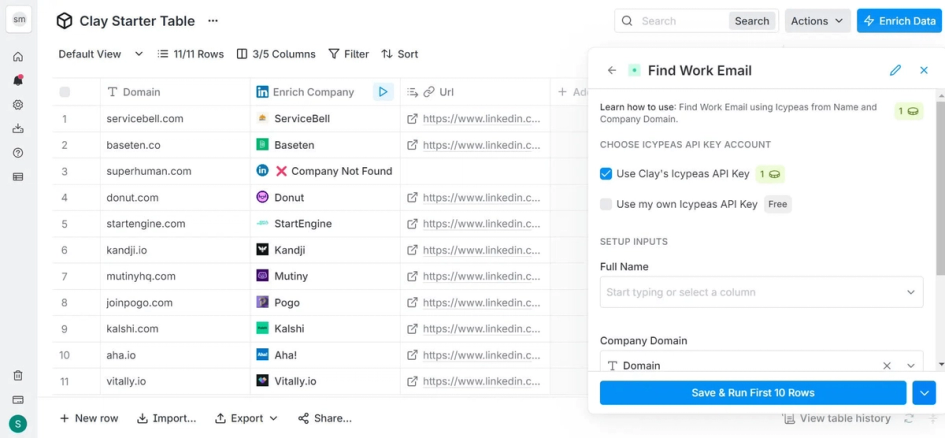
Clay transforms raw prospect data into actionable intelligence. It aggregates information from more than 50 data providers simultaneously, applies AI scoring against your ICP, and pushes enriched records into your CRM or outreach sequences without manual data entry.
Key Capabilities
• AI data enrichment: Fills gaps in prospect profiles by querying multiple sources in parallel, including LinkedIn, Clearbit, Apollo, and proprietary data providers.
• Intelligent lead scoring: AI agents evaluate leads against your defined ICP criteria and rank them by conversion likelihood.
• CRM and campaign integrations: Pushes enriched leads and scores to Salesforce and HubSpot, triggering downstream automation workflows.
• Sales handoff automation: Routes qualified leads with full enrichment context and readiness signals.
• Audience sync workflows: Builds and segments audiences based on enriched attributes, then syncs to email and ad platforms.
Clay's model addresses one of the most common causes of routing failure: acting on incomplete prospect data. Enrichment happens as part of the workflow, not as a manual pre-step before automation runs.
Pricing: Free tier available. Paid plans start at approximately $149/month, scaling with credit usage.
Best for: B2B marketing ops teams managing high-volume lead pipelines who need AI to handle enrichment, scoring, and routing without custom integrations.
2. Zapier: Cross-App Automation for Marketing Teams

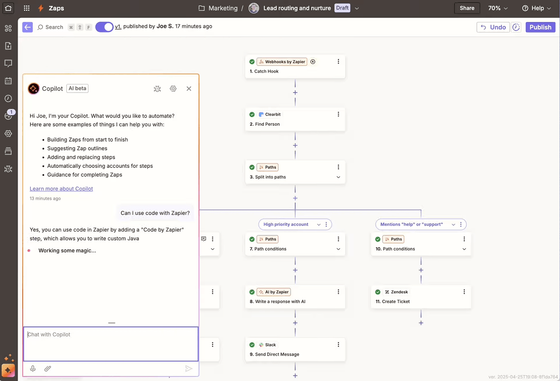
Zapier connects more than 9,000 apps and routes data between them based on trigger-action logic. It is the broadest integration platform available and requires no technical expertise to operate.
Key Capabilities
• AI Actions: Build workflows using natural language prompts. Zapier generates the automation logic from a description of what you want.
• Lead routing automation: Qualifies and assigns leads from web forms to HubSpot or Salesforce based on rules you define.
• Audience sync: Pushes qualified audiences from your CRM to email platforms, ad networks, or data warehouses in real time.
• Reporting workflow automation: Consolidates campaign metrics from multiple platforms into centralized dashboards.
• Zapier Agents: Monitor customer sentiment on multiple platforms and route insights to the right team members automatically.
Pricing: Free plan includes 100 tasks/month. Professional starts at $29.99/month (monthly billing) or $19.99/month (annual) with 750 tasks. Team runs $103.50/month with 2,000 tasks and shared workspaces.
Best for: Marketing ops teams that need broad integration coverage and fast deployment without a learning curve. Zapier is the right choice when linear workflows connect two or three tools.
3. Make: Visual Automation Builder for Complex Marketing Workflows

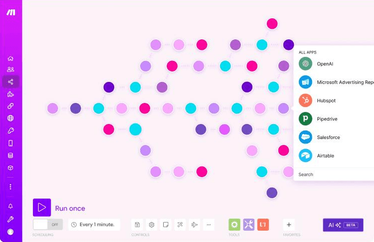
Make uses a drag-and-drop canvas where each workflow action appears as a connected module. This visual approach makes complex conditional logic transparent and maintainable without developer involvement.
Key Capabilities
• Visual scenario builder: Maps entire workflows graphically, showing exactly how data moves between systems.
• AI toolkit: Connects to more than 350 AI apps and supports deployment of AI agents that execute multi-step workflows within defined guardrails.
• Conditional logic and loops: Handles sophisticated routing rules, lead enrichment transformations, and data activation pipelines without code.
• Unlimited modules per scenario: Supports comprehensive reporting workflows and customer data automation without cost increases per step.
• 3,000+ app integrations: Covers CRMs, email platforms, data warehouses, and marketing tools.
Pricing: Free plan includes 1,000 credits/month with two active scenarios. Core starts at $9/month (annual) for 10,000 credits with unlimited active scenarios. Pro runs $16/month. Teams costs $29/month. Enterprise pricing is custom.
Best for: Marketing ops teams managing multi-branch workflows where logic varies by lead type, segment, or campaign. Make performs better than Zapier when workflows require more than linear trigger-action sequences. For teams that want full infrastructure control, n8n workflows for marketing operations offer a self-hosted alternative worth evaluating alongside Make.
Fast deployment helps only when the routing rules and source records are already reliable.
4. Workato: Enterprise AI Agents for Marketing Operations

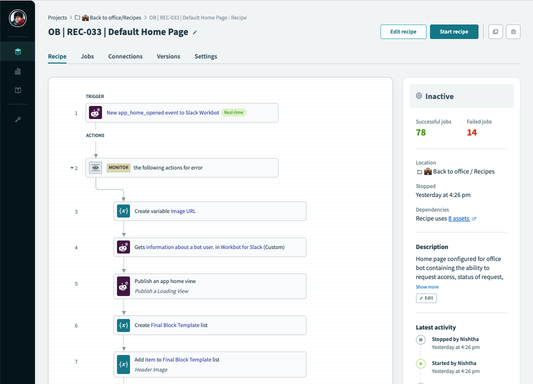
Workato is built for enterprises that need governance, compliance controls, and reliable automation at scale. Its agentic orchestration layer handles complex marketing ops workflows that require precision and audit trails.
Key Capabilities
• On-premises connectivity: Integrates with legacy CRM systems and data warehouses without cloud-only limitations.
• Enterprise governance: Role-based access, audit trails, and compliance controls for regulated industries.
• AI-driven automation: Intelligent agents manage lead routing, bulk actions, and sales handoff workflows with minimal manual intervention.
• Error handling and resilience: Built-in retry logic and data validation reduce failed syncs between CRM and marketing platforms.
• Sub-workflows and conditional logic: Handles multi-step automations like lead enrichment, audience sync, and reporting pipelines.
Pricing: Usage-based model with custom pricing. Best suited for organizations with high-volume automation needs and dedicated implementation resources.
Best for: Enterprise marketing ops teams managing complex data flows, strict compliance requirements, and mission-critical CRM automation at the department level.
5. HubSpot AI: Integrated Marketing Workflow Automation
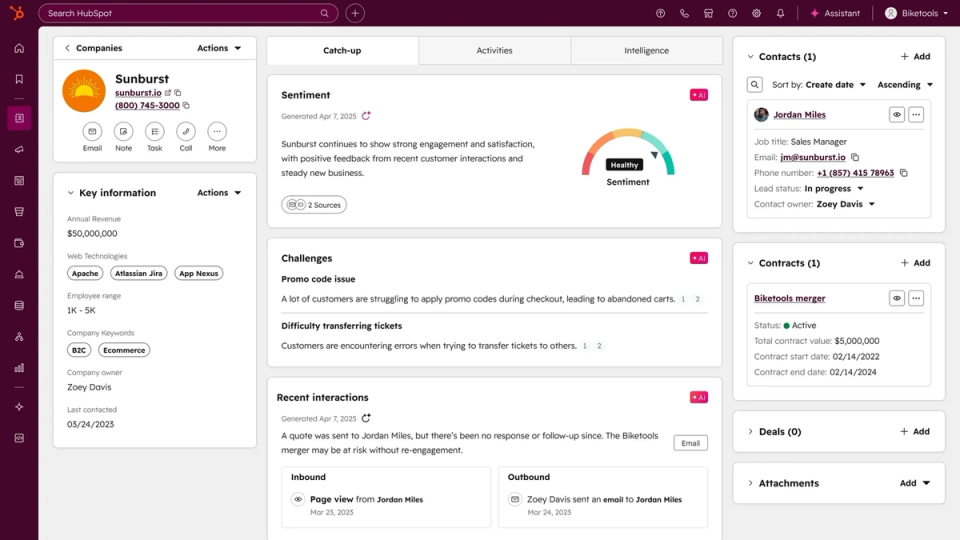
HubSpot Marketing Hub bundles CRM, campaign automation, and AI capabilities in one platform. Contact data, email campaigns, lead scoring, and analytics share the same database, which eliminates the sync problems that arise when marketing and sales use separate tools.
Key Capabilities
• Breeze AI for predictive lead scoring: Analyzes historical data and contact behaviors to identify conversion-ready prospects.
• Smart segmentation: Categorizes contacts based on demographics, behavior, and lifecycle stage.
• Send-time optimization: AI determines the optimal delivery window for each contact to improve engagement rates.
• Reporting workflow automation: Consolidates campaign results data and generates insights without manual report creation.
• Native CRM integration: Sales gets automatic notifications when leads hit scoring thresholds or visit high-intent pages.
The unified data model is HubSpot's primary operational advantage. When campaign activity, lead scores, and CRM records share the same database, teams avoid the sync latency and mapping errors that occur when marketing and sales use separate platforms.
Pricing: Free plan available. Starter runs $20/seat/month (annual). Professional costs $890/month (annual) with three core seats and a $3,000 onboarding fee. Enterprise starts at $3,600/month with five core seats.
Best for: Marketing ops teams already in the HubSpot ecosystem, or those prioritizing a unified platform over best-of-breed point solutions.
6. Salesforce Agentforce: AI Agents for Revenue Operations
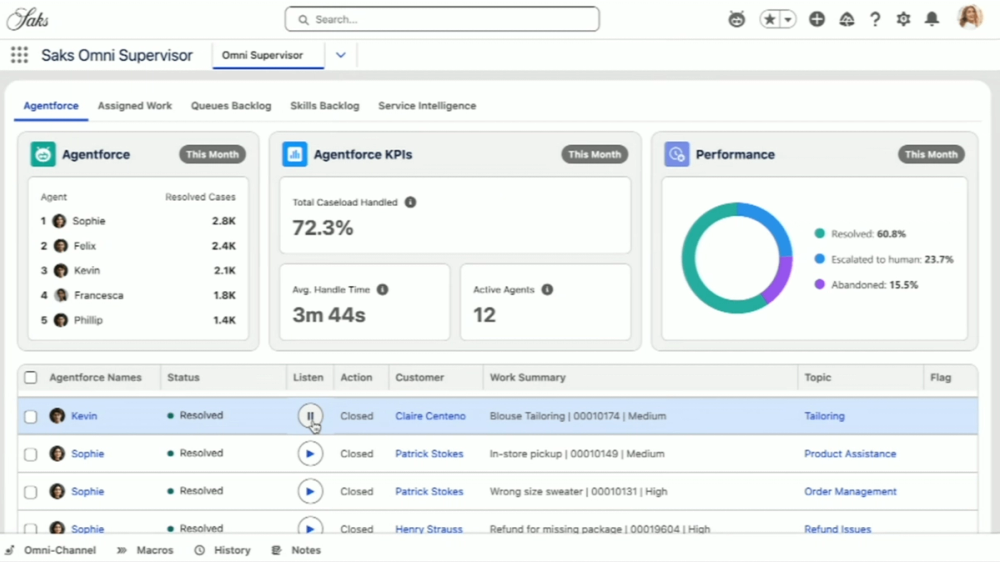
Salesforce Agentforce brings autonomous AI agents into the Salesforce ecosystem. Agents operate inside the platform with direct access to CRM data without API middleware.
Key Capabilities
• Autonomous lead routing: AI agents qualify and assign leads based on territory, capacity, and scoring rules without manual intervention.
• Campaign QA automation: Agents validate campaign configurations, spot data inconsistencies, and flag compliance issues before launch.
• Sales handoff workflows: Automated transitions from marketing to sales with enriched lead context and no dropped information.
• CRM workflow orchestration: Agents execute multi-step processes within Salesforce without requiring external automation tools.
Pricing: Marketing Cloud Growth Edition starts at $1,500/month. Advanced Edition runs $3,250/month. Agentforce is included in both editions.
Best for: Organizations already invested in Salesforce that want AI-driven automation without managing third-party integrations or additional vendors.
7. Marketo Engage: B2B Demand Generation and Lead Lifecycle Management

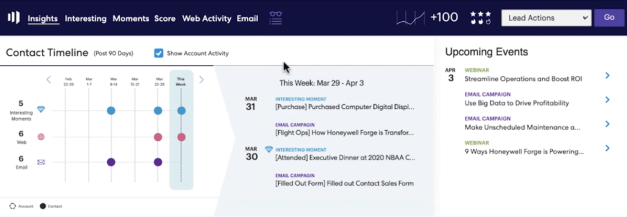
Marketo Engage is built for B2B demand generation at scale. It handles the full lead lifecycle from initial capture through nurture, scoring, and handoff to sales, with AI features layered into each stage.
Key Capabilities
• Predictive content: AI surfaces the most relevant content for each prospect based on behavior and firmographic data.
• AI-powered lead scoring: Scores leads against behavioral signals and ICP fit, routing high-intent prospects to sales queues automatically.
• Behavior-based triggers: Launches nurture sequences, alerts, and handoff actions based on real-time contact activity.
• Revenue attribution: Connects campaign activity to pipeline and closed revenue with multi-touch attribution models.
• Deep CRM integration: Native sync with Salesforce and Microsoft Dynamics keeps marketing and sales data aligned without manual reconciliation.
Pricing: Custom pricing based on database size and feature tier. Positioned for mid-market to enterprise.
Best for: B2B marketing ops teams running multi-channel demand generation programs that require granular lead lifecycle tracking and attribution.
8. Mutiny: Website Personalization for B2B Pipeline Conversion

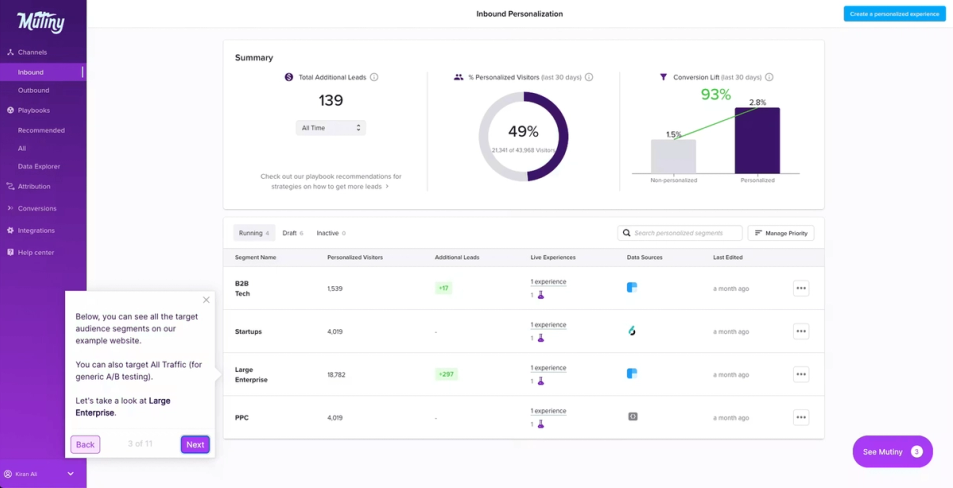
Mutiny personalizes your website for different audience segments without engineering involvement. Where the other tools in this guide automate data movement and operational workflows, Mutiny focuses on activating that data through personalized website experiences and conversion optimization. It reads firmographic and behavioral data to show each visitor content tailored to their industry, company size, or stage in the buying process.
Key Capabilities
• AI audience segmentation: Identifies high-value visitor segments based on ICP fit and intent signals.
• Dynamic content personalization: Swaps headlines, CTAs, and page sections based on visitor attributes without touching the codebase.
• A/B testing: Tests personalization variations against control pages and surfaces statistically significant results.
• CRM and ABM integrations: Connects with Salesforce, HubSpot, Segment, and 6sense to sync account data and target lists.
Pricing: Custom pricing. Positioned for mid-market and enterprise B2B companies with established web traffic.
Best for: Marketing ops teams running account-based programs that need to convert high-value visitors with messaging matched to their segment, not generic landing pages.
9. Hightouch: Reverse ETL for Audience Sync and Data Activation
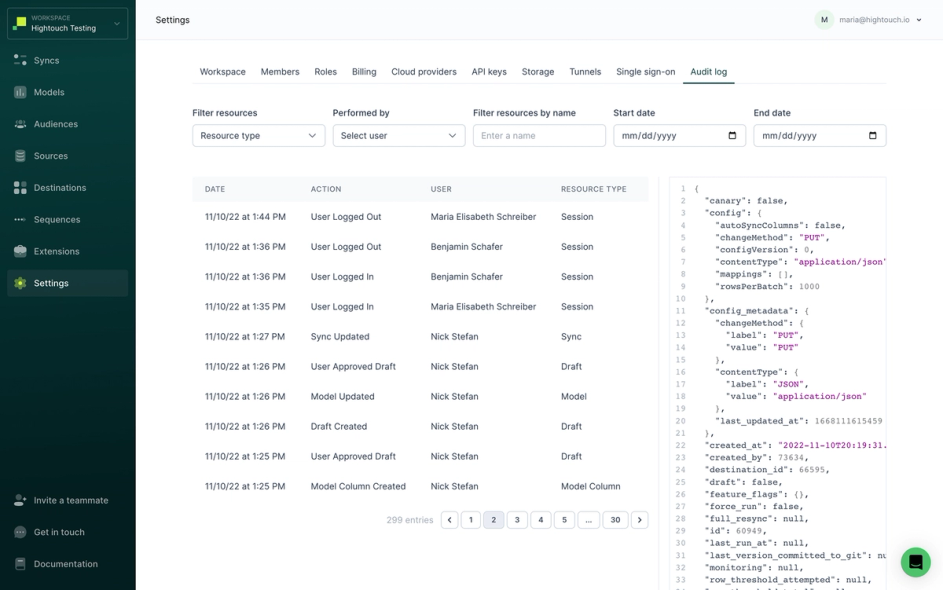
Hightouch turns your data warehouse into a customer data activation platform. It syncs warehouse data directly to CRMs, email tools, and ad networks, eliminating manual exports and the data lag that standard ETL processes introduce.
Key Capabilities
• Warehouse-native syncs: Pushes data from Snowflake, BigQuery, or Redshift to Salesforce, HubSpot, and 200+ destinations without custom code.
• AI Decisioning: Applies intelligent audience segmentation and campaign targeting logic within automated sync workflows.
• Real-time activation: Ensures marketing tools operate on fresh, accurate customer data at all times.
• Flexible modeling: Handles complex customer data transformations and enrichment directly in the warehouse before activation.
Pricing: Free tier available for smaller deployments. Enterprise plans are custom based on data volume and destinations.
Best for: Marketing ops teams with mature data warehouses who need reliable, bi-directional data flow between analytics and activation tools. Hightouch is particularly effective for teams already running dbt models or structured SQL pipelines.
10. Customer.io: Journey Automation for Marketing Ops

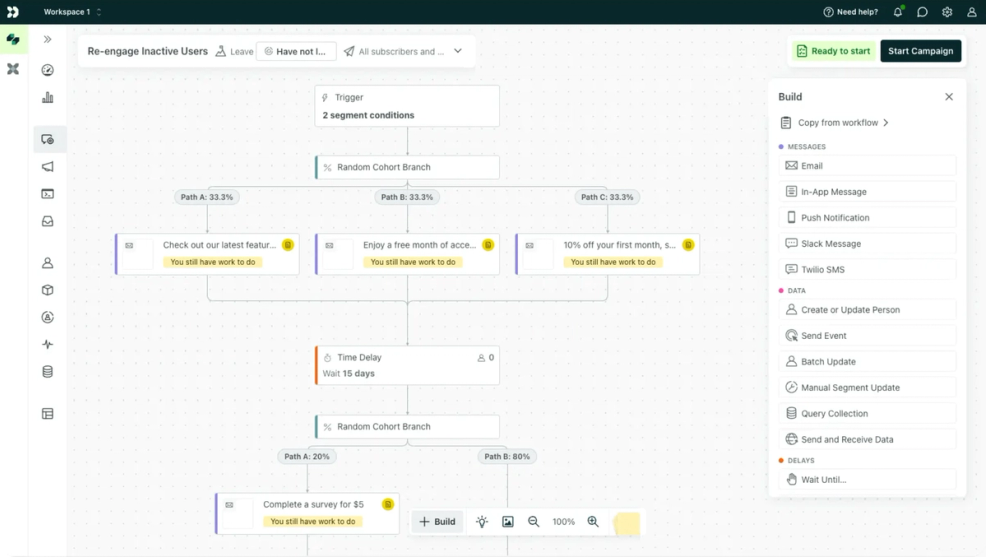
Customer.io handles behavioral-triggered workflows that adapt in real time to customer actions. It connects to your CRM and data warehouse to trigger campaigns based on what contacts do, not on static list membership.
Key Capabilities
• Behavioral triggers: Launches campaigns based on real-time customer actions synced from your CRM or data warehouse.
• Audience sync automation: Keeps segments fresh and accurate by pulling directly from your warehouse or CRM, with no manual list uploads required.
• AI send-time optimization: Maximizes engagement rates by delivering messages when each contact is most likely to respond.
• Native CRM integrations: Syncs with Salesforce, HubSpot, and Segment for seamless data flow throughout the marketing stack.
• Built-in reporting: Tracks campaign results and customer lifecycle metrics without requiring external BI tools for standard reporting needs.
Pricing: Plans start at $100/month. Pricing scales with message volume and contact database size.
Best for: Marketing ops teams that need to automate customer journeys based on real-time behavioral data, particularly when existing tools rely on static list-based sending.
Tool Comparison: AI Workflow Automation for Marketing Ops
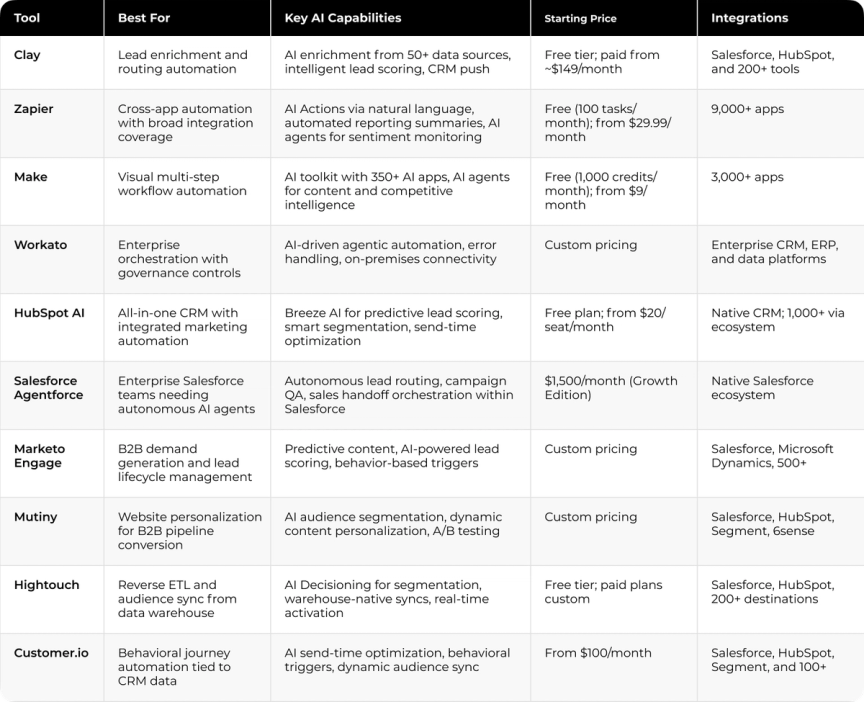
The table below summarizes each tool's primary use case, key AI capabilities, starting price, and integration reach. Pricing may vary by billing terms and plan configuration. Verify current rates on each vendor's pricing page before purchasing.
How to Choose the Right AI Workflow Automation Tool
Five questions determine which tool fits your marketing ops stack.
1. What bottleneck is costing the most pipeline?
Lead routing delays, stale audience segments, manual reporting, and data gaps between marketing and sales all require different solutions. Clay and Zapier address lead routing. Hightouch and Customer.io address audience sync. Make and Workato address multi-system orchestration. Define the primary problem before evaluating platforms, and review your marketing measurement strategy with AI to understand which gaps are costing the most pipeline.
2. What does your data layer look like?
AI automation tools only perform as well as the data they operate on. If your CRM has duplicate records, inconsistent UTMs, or incomplete contact attributes, automated routing will propagate those errors faster than a human would. Surface your data quality issues before adding automation.
3. Does your team have engineering support?
Zapier and Clay deploy without developer involvement. Make requires some configuration work. Workato and Salesforce Agentforce benefit from dedicated implementation resources. Match the tool's depth to the team that will maintain it.
4. Do you need governance and audit trails?
Regulated industries and enterprise organizations need role-based access, audit logs, and compliance controls. Workato and Salesforce Agentforce are built for these requirements. HubSpot and Marketo offer adequate governance for most mid-market scenarios.
5. What is the total cost of ownership?
Sticker price covers licensing only. Factor in onboarding fees, training time, ongoing maintenance, and the cost of integration work between tools. A cheaper platform with higher implementation overhead often costs more over 12 months than a more expensive platform that deploys faster.
How Darwin Fixes the Foundation Before Automation Runs
Teams come to Darwin after buying a tool that did not perform as expected. The tool was not the problem. The data layer underneath it was. Lead routing fired on incomplete records. Audience syncs pushed stale segments. Reporting pulled from sources that did not agree with each other. Adding more automation to that foundation made the errors faster, not smaller.
Darwin works through the Surface, Connections, Clarity and Momentum phases to find and fix those gaps before any new automation is deployed. That sequence matters. A team that skips Surface and goes straight to Momentum-layer tooling will spend months troubleshooting failures that were predictable from the start.
The work covers lead routing logic, CRM data quality, audience sync pipelines, attribution setup, and sales handoff workflows. The goal is a shorter list of automations that run correctly every time.
FAQs
Q1. What is AI workflow automation for marketing operations?
AI workflow automation connects your CRM, data warehouse, email platforms and ad networks and uses AI to trigger actions, route data and make decisions without manual intervention. In marketing ops, this covers lead routing, audience sync, campaign QA, reporting preparation and sales handoff. The AI component adds scoring, enrichment and adaptive logic that rules-based automation cannot handle.
Q2. Which AI workflow automation tool is best for lead routing?
Clay handles lead enrichment and scoring before routing. Zapier and Make execute the routing logic between systems. Workato is the right choice when routing requires enterprise governance and audit trails. For teams already in Salesforce, Agentforce handles routing natively within the CRM without additional tools.
Q3. What is reverse ETL and why does it matter for marketing ops?
Reverse ETL syncs data from your warehouse back into operational tools like CRMs, email platforms and ad networks. Standard ETL moves data into a warehouse for analysis. Reverse ETL makes that analyzed data available in the tools your team uses to act on it. Hightouch is the leading reverse ETL platform. It eliminates manual audience exports and keeps your marketing tools running on warehouse-quality data.
Q4. How do I know if my marketing ops team is ready for AI automation?
AI automation requires a functioning data layer underneath it. If your CRM records are incomplete, your UTM naming is inconsistent, or your lead scoring model has not been validated, automating those workflows will amplify the errors, not eliminate them. Readiness means your foundational data is clean enough to trust, your workflows are documented and your team understands what each automation is supposed to produce.
Q5. How long does implementation take for these tools?
Zapier and Clay deployments can be operational in days. Make and Workato implementations with multiple integrated systems run two to six weeks. Marketo and Salesforce Agentforce implementations with full CRM alignment and attribution setup can take two to four months. The larger variables are data quality remediation and workflow documentation, not the technical setup itself.