
Quick Answer:
The best customer journey analytics tool for a B2B SaaS team is the one built for its biggest gap. Cometly and Dreamdata lead on ad-to-revenue and account-level attribution, Mixpanel and Amplitude own product analytics, Segment supplies the data layer beneath them, and enterprise suites like Adobe, Salesforce and Quantum Metric fit teams already inside those ecosystems. Whichever you choose, the reporting is only as honest as the source data, consent and CRM handoffs feeding it.
TL;DR
- Browser privacy controls and ad blockers make client-side attribution less complete, so B2B teams increasingly combine first-party data, server-side tracking and CRM outcomes.
- Server-side collection reduces reliance on browser-only signals and can improve the conversion data sent back to ad platforms.
- Account-level attribution (Dreamdata, Adobe B2B Edition, HockeyStack) fits long multi-stakeholder cycles.
- Product analytics (Mixpanel, Amplitude) connects pre-signup behavior to post-login usage and revenue.
- Segment provides customer data infrastructure for journey analytics. Its free plan supports up to 1,000 monthly users, and the platform advertises 700+ pre-built integrations.
- Match the platform to your gap first, then make sure your data is clean enough for it to tell the truth.
Choosing a customer journey analytics tool is a revenue-measurement decision. B2B teams need to connect acquisition, website behavior, product activity and CRM outcomes without treating last-touch attribution as the whole journey. The 12 platforms below solve different parts of that problem, from multi-touch attribution and account-level analytics to product behavior, orchestration and data infrastructure.
How We Picked These Tools
Every tool here earns its place by helping a B2B SaaS team see the customer journey and tie it to revenue. We weighed four things: how completely each platform captures signals, how well it joins them into an account view, how readable the result is for a marketer, and how fast it turns a finding into action. Words like leader and best below refer to fit for a specific job within this comparison.
A few tools sit slightly outside a pure B2B SaaS build, and we kept them on purpose. Segment is data infrastructure, so it appears as the layer the others sit on. Salesforce Marketing Cloud, Adobe Customer Journey Analytics and Quantum Metric are enterprise suites that many B2B SaaS teams inherit through an existing stack, so they matter once you already own that ecosystem. Insider One leans B2C and omnichannel, and it earns a spot as the agentic-orchestration reference point, with a lean SaaS team treating it as a later option. Read each entry’s Best For line to see where it fits.
Reading This Comparison Through Four Questions
Every tool below answers four questions that decide whether analytics changes anything. The first is Surface: does the platform capture the signals you lose today, from server-side conversions to anonymous account activity? The second is Connections: does it join ad spend, product usage, CRM records and revenue into one account view? The third is Clarity: can a marketer read the result and act, or does it need an analyst? The fourth is Momentum: does the tool push the finding into campaigns and sales motions fast enough to matter. Darwin built Darwin Flux around these same four pillars, so use them as your scoring rubric as you read.
1. Cometly

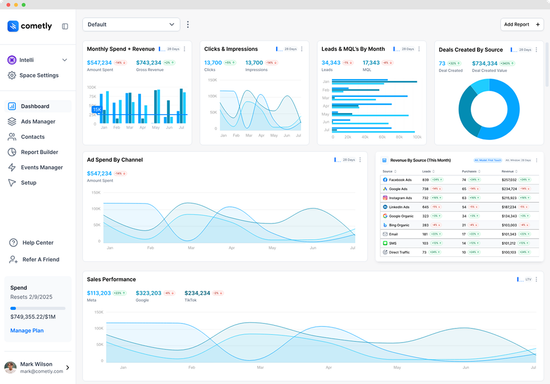
Cometly connects the path from ad click to closed revenue through server-side tracking and account-level attribution. Its current positioning is explicitly built around B2B SaaS teams that need to connect campaign spend with pipeline and revenue.
What Makes It Stand Out
Cometly combines its browser pixel with server-side events so conversion tracking does not depend on browser signals alone. It also sends conversion data back to major ad platforms through server-side Conversion API connections.
Its current Core plan includes server-side tracking, multi-touch attribution, account journeys, Conversion API support and connections to major ad platforms such as Meta, Google, LinkedIn, TikTok, Microsoft, Reddit and Snapchat.
For revenue-focused teams, Cometly can connect CRM and revenue outcomes to paid-media touchpoints throughout the funnel. Enterprise plans also support CRM and warehouse syncs.
Key Features
The platform supports browser-side and server-side event collection, account journeys, dashboards, audiences and conversion APIs. This gives teams a first-party measurement layer that can continue to capture server events when browser-only tracking is incomplete.
Multi-touch attribution models let teams compare how channels contribute across the buying path, while account journeys roll individual contacts into a company-level view.
Cometly also includes AI-assisted analysis and ad-management features, but its core value in this comparison is the connection between paid media, account journeys and revenue outcomes.
The current pricing page lists 70+ integrations and includes warehouse support such as Snowflake, BigQuery and Redshift on Enterprise plans.
Best For
Digital marketers and agencies running multi-channel paid campaigns who must prove ROI. It carries the most weight for B2B SaaS teams managing large ad budgets, where accurate attribution steers scaling decisions and CAC.
Pricing
Cometly uses usage-based pricing tied to monthly pageviews. Its current pricing page does not publish a fixed starting rate; Core and Enterprise are quoted around pageview volume and requirements. Monthly and annual billing are available, with a 20% discount for annual billing.
2. HubSpot Marketing Hub

HubSpot Marketing Hub takes a platform approach to journey analytics. It is a full marketing platform that includes customer journey analytics, and that suits teams who want everything under one roof.
What Makes It Stand Out
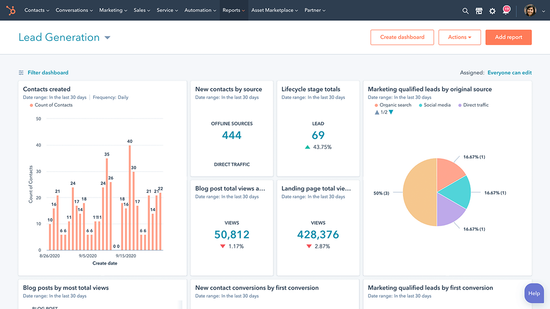
The platform joins marketing automation, CRM, content management and analytics in one system. That makes journey reporting easier to connect with contacts, companies, deals and revenue data without building a separate analytics stack.
HubSpot's Journey Automation, currently in beta for Marketing Hub Enterprise, lets marketers build multi-stage journeys in one view. Contacts can move through different paths as they progress through stages, and teams can analyze journey performance after launch.
Customer journey analytics reports are available in Enterprise editions and show how touchpoints influence progression through a journey. HubSpot supports journey reports for contacts, deals and tickets depending on the Hub subscription, while Marketing Hub Enterprise also includes multi-touch revenue attribution.
AI runs throughout. AEO tracks your brand visibility in AI search results and recommends fixes. The Customer Agent captures visitor interest and turns traffic into sales-ready leads. Intelligent forms adapt to each visitor and enrich data.
Key Features
Multi-touch revenue attribution assigns dollar values to every marketing touchpoint. Journey reports track conversions, deals and website engagement by stage. The Marketing Studio is an AI-powered workspace for campaign planning and execution.
Email automation delivers 1:1 content at scale using CRM data. Lookalike Lists, currently in beta, find high-potential prospects within existing contact lists. The platform manages ads across Meta, Google, LinkedIn and TikTok from one interface, while social tools combine conversations in a unified inbox.
Best For
Growing startups and small businesses that want an integrated platform from day one. It also fits enterprise marketing teams that need governance and adaptability for multi-channel campaigns, and any team aiming to align marketing and sales on shared CRM data.
Pricing
HubSpot offers a free tier and paid Marketing Hub editions. Current US pricing lists Professional from $890/month and Enterprise from $3,600/month; Starter pricing can vary with active promotions and seat configuration.
3. Mixpanel

Mixpanel began as a product analytics tool. Its current capabilities can connect pre-signup behavior with product activity after signup, giving teams a broader view of the customer journey.
What Makes It Stand Out
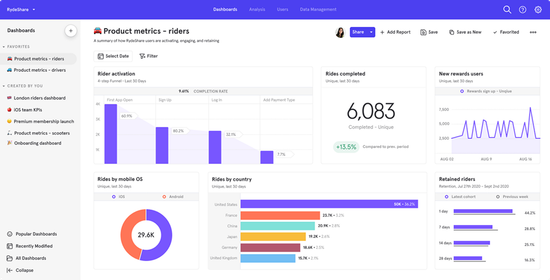
Its defining feature is ID Merge. Mixpanel joins anonymous website visits with post-login app usage on every device into one continuous activity stream. Many journey analytics platforms make you pick marketing data or product data, and Mixpanel treats that as a false choice.
Its multi-touch attribution (in beta) shows which channels cause real engagement inside your product, going past form submissions. You can ingest ad spend, clicks and impressions to calculate ROAS. The system also feeds results back to ad platforms like Meta and Google through native integrations.
Account Analytics reshapes usage reporting for B2B teams. You analyze behavior at the company level, and auto-generated Account Profiles show usage patterns, top users and retention metrics with no custom dashboards per client. The platform tracks activation metrics such as number of users who completed an event, grouped by account, and answers questions user-level data cannot.
Revenue Analytics ties behavioral data to real dollars. B2B subscription businesses can track ARR growth rate, churn rate and net revenue retention. Mixpanel recommends a data warehouse connection for fully accurate revenue data.
Key Features
Session tracking and automatic page-view events capture website behavior with a two-line snippet. Custom buckets group users into segments on the fly. View Users identifies the exact people behind a metric spike.
Tables monitor segment health by website visits, signups, purchases, revenue and CAC by region. Cohort analysis groups customers and tracks behavior over time. Funnel analysis flags drop-off points, and retention tracking measures long-term engagement.
The platform integrates with Segment, Twilio and major data warehouses. Live dashboards update continuously.
Best For
B2B SaaS companies that want product analytics and journey analytics in one platform. It carries the most value for product-led growth teams tracking activation, retention and account-level metrics, and when marketing and product need shared visibility into the full user experience.
Pricing
Mixpanel's Free plan includes up to 1 million monthly events and 10,000 session replays. Growth starts at $0 with the first 1 million monthly events included and scales with event volume up to 20 million monthly events; Enterprise is sales-led.
4. Amplitude

Amplitude started as a product analytics platform and now adds an AI layer to behavioral analysis. The company says it serves more than 4,900 customers.
What Makes It Stand Out
Amplitude reports that its Global Agent reached a 76% overall task-success score across a four-part analytics benchmark covering descriptive, diagnostic, predictive and prescriptive work. The company says that score improved more than sevenfold over six months of iteration.
In The Forrester Wave: Digital Analytics Solutions, Q3 2025, Amplitude was named a Leader and a Customer Favorite, with the highest possible scores in 21 criteria, according to Amplitude's publication of the result.
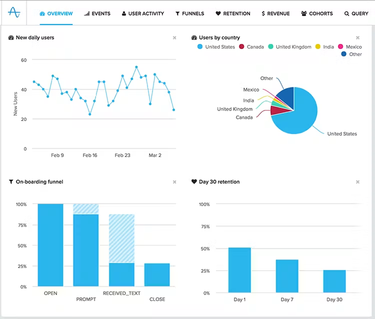
Here is what separates Amplitude from web analytics tools: it was built from day one for software products. Google Analytics tracks website traffic, and Amplitude answers product questions at the individual user level. You study what people do session by session across your site and app.
Account-level analytics changes the picture for B2B teams. You analyze behavior at the company level, and the platform shows usage patterns and top users inside each account. It also reveals shifts in trends over time. You can integrate with Salesforce to enrich product usage with sales-cycle context.
Key Features
All Amplitude plans include event segmentation, funnel analysis, retention analysis, journeys, data tables, user sessions and stickiness. Advanced chart families vary by plan: engagement matrix, lifecycle, compass, revenue LTV, experiment results, personas and impact analysis.
Behavioral cohorting groups users by shared actions. You can build an audience like users who finished onboarding in the last seven days but have not triggered the core feature, then sync it to ad networks, CRMs or activation tools right away. Static cohorts come from user-level data or CSV imports. Behavioral cohorts are dynamic, defined by event sequences and time intervals, and update on their own.
The data model is hybrid. Autocapture handles broad frontend coverage the moment the SDK is installed. Manual tracking covers backend events where precision counts: payments, account upgrades and subscription changes.
Amplitude Experiment works in the same data layer as your cohorts and funnels. There is no separate export and no reconciliation between dashboards.
Best For
Data teams and product managers at B2B SaaS companies who need deep behavioral analytics tied to account metrics. It works best when you have analyst resources to use the platform fully. The learning curve grows steeper at higher tiers, and teams with no dedicated analytics support may find it hard.
Pricing
The Free plan includes 2 million events per month with no time limit. Plus starts at $0 for the first 2 million monthly events and scales with usage up to 70 million events; Growth and Enterprise use custom event-based pricing.
5. Salesforce Marketing Cloud
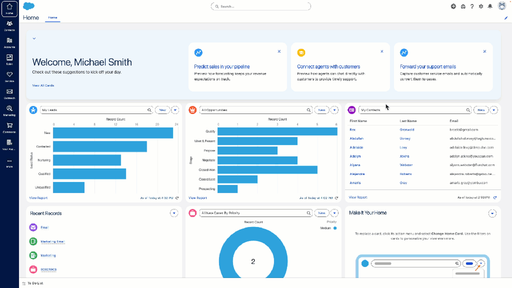
Salesforce is relevant when journey analytics and orchestration need to live inside an existing Salesforce stack. Marketing Cloud Next connects campaign planning, customer data, automated journeys and Agentforce capabilities on the Salesforce platform.
What Makes It Stand Out
For current buyers, Salesforce offers Marketing Cloud Next alongside the established Marketing Cloud Engagement product family. Growth and Advanced editions support automated customer journeys and Agentforce campaign creation. Journey Builder remains part of Marketing Cloud Engagement.
Salesforce is also expanding autonomous AI agents through Agentforce. In Marketing Cloud Next, agents support campaign creation and other marketing workflows; Advanced adds capabilities such as journey decisioning and predictive engagement features.
Key Features
Marketing Cloud Next uses Salesforce data and workflows to connect customer, campaign and revenue signals. Growth and Advanced editions include campaign creation, segmentation and automated customer journeys, with more advanced personalization and scoring in higher tiers.
Salesforce retired Social Studio in November 2024, so older references to it are outdated. Marketing Cloud Engagement still includes tools such as Journey Builder and Mobile Studio for established Engagement customers.
Best For
Enterprise marketing teams that run large, multi-business-unit campaigns across many channels. It also fits B2B marketers focused on lead generation and long-cycle nurturing, and B2C brands running high-volume transactional messaging at peak periods.
Pricing
Current US list pricing is $1,500 per organization per month for Marketing Cloud Next Growth and $3,250 for Advanced, billed annually. Salesforce notes that pricing can change and recommends contacting sales for detailed packaging.
6. Adobe Customer Journey Analytics

Adobe Customer Journey Analytics sits on Adobe Experience Platform and is designed to analyze cross-channel data in a shared framework. For B2B teams, the B2B Edition adds analysis at the individual, buying-group, account and opportunity levels. For organizations already on Experience Platform, the data lake, governance tools and ingestion pipelines can stay within the same broader data stack.
What Makes It Stand Out
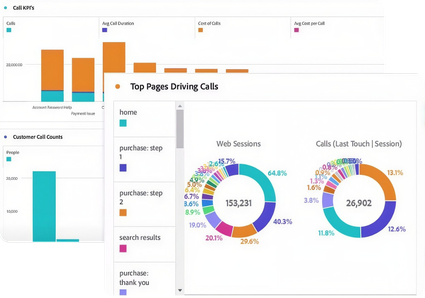
The B2B Edition is the key reason Adobe belongs in this comparison. It supports journey analysis across individuals, buying groups, accounts and opportunities, including pipeline fallout, marketing lifecycle analysis and account-level journey visualization.
The platform joins data from CRM systems, marketing orchestration tools, web behavior and offline touchpoints into one workspace. Teams can map every critical touchpoint, uncover engagement patterns and find revenue opportunities with features like canvas and guided analysis. It integrates deeply with Adobe Real-Time CDP, Journey Optimizer and Marketo Engage. Audience segments, campaign orchestration and analytics run from the same data foundation.
Customer Journey Analytics supports unlimited dimensions and metrics, going past the limits of older web analytics. The Experience Data Model standardizes schemas across sources. Derived fields let you reshape data at report time and leave the dataset untouched.
Key Features
Analysis Workspace provides drag-and-drop visualizations with self-serve building. Guided analysis covers trends, funnels, retention, conversion tracking and release measurement. Field-based and graph-based stitching connect anonymous visits with authenticated sessions across devices.
Intelligent captions can generate natural-language summaries of visualizations. The Data Insights Agent answers questions in natural language and builds freeform tables, visualizations and data comparisons from the data available in Customer Journey Analytics.
Best For
Enterprise marketing and sales teams at B2B organizations that need full-funnel visibility from acquisition through retention. It fits data-mature companies already invested in Adobe Experience Platform who want account-level analytics tied to revenue.
Pricing
Adobedoes not publish a self-serve list price for Customer Journey Analytics B2B Edition. The current product description licenses it per 1,000 Reportable Businessperson Profiles, with additional capacity and service add-ons available; buyers need a sales quote.
7. Segment

Segment provides the customer data infrastructure for collecting, resolving and routing journey data across analytics and activation tools.
What Makes It Stand Out
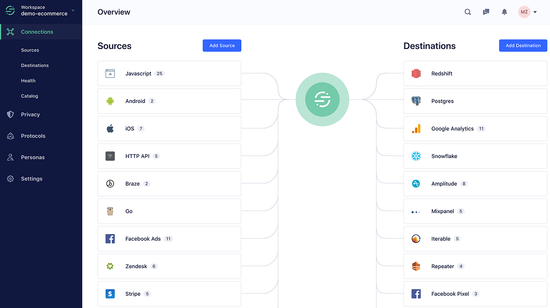
Twilio Segment collects customer data from multiple sources, standardizes it and routes it through a large integration ecosystem. Segment's current signup page advertises 700+ pre-built integrations and a free tier for up to 1,000 monthly users.
The value sits in three products that work together. Connections is your data pipeline and pulls events from websites, mobile apps and servers. Unify builds identity-resolved profiles and stitches anonymous visits to authenticated sessions across devices. Engage lets you build behavioral audiences and sync them to downstream tools live.
Key Features
Connections handles event collection and routing, while Unify builds identity-resolved profiles. Segment supports client-side and server-side data collection and provides developer tooling for implementation.
Best For
Engineering and data teams that build customer data infrastructure from the ground up. It suits companies tired of maintaining dozens of custom integrations between tools.
Pricing
The current Twilio Segment Connections pricing page lists Free at $0 for up to 1,000 monthly tracked users, Team from $120/month for 10,000 monthly tracked users, and Business at custom pricing. The Free plan includes 2 sources, 10 seats and 700+ integrations.
8. Woopra

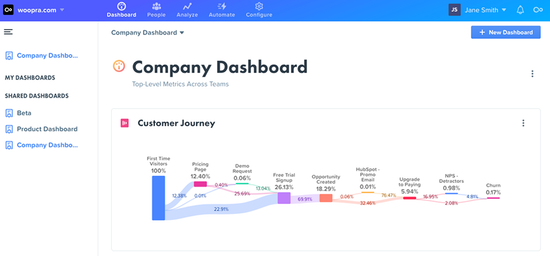
Woopra centers on what many journey analytics platforms treat as an afterthought: the single person, tracked live. Where other tools lean on aggregate cohorts and delayed batch processing, Woopra keeps the individual profile current to the minute.
What Makes It Stand Out
The platform builds a unified profile for each customer and stitches website visits, product usage, support tickets and marketing interactions into one continuous timeline. You see what someone did five minutes ago, which counts when a sales rep needs context before calling a high-value lead who is reading your pricing page.
Woopra's value is the live customer profile and timeline: teams can inspect a person's recent activity, move into journey analysis and trigger actions from behavioral changes. This is especially useful when sales, support and success teams need the same behavioral context.
The visual Journeys tool maps workflows with drag-and-drop and no code. Funnel analysis reveals drop-offs, path analysis shows where users leave the intended flow, and segmentation works at the journey-behavior level. Teams with no developers can build these analyses on their own.
The Automations module ties behavior to action. A user inactive for seven days can trigger a re-engagement email, while repeated support activity can alert the success team. Woopra's current pricing page lists 30+ integrations, including CRM and support tools used to connect journey data with downstream actions.
Key Features
Activity monitoring runs live, behavioral segmentation updates on the spot and automated workflows span your tech stack. The Salesforce integration lets sales teams see product behavior inside their CRM.
Best For
B2B SaaS teams that need live visibility into individual customer behavior for sales, support and success operations.
Pricing
Woopra's current pricing page lists Pro from $999/month with 5+ million events per month and 24+ months of data retention. Enterprise pricing is custom.
9. Dreamdata

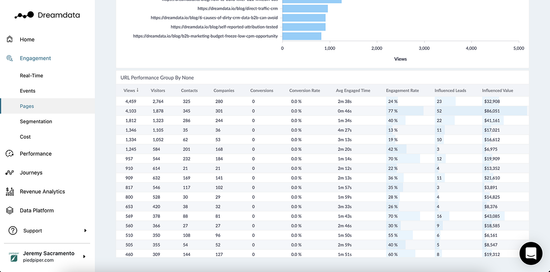
Dreamdata built itself for B2B revenue attribution, and that focus shows. The Copenhagen-based platform pulls CRM data, ad platforms, marketing automation and website behavior into one account-based journey analytics platform.
What Makes It Stand Out
The account-centric model is the main reason Dreamdata fits B2B SaaS. It organizes known and anonymous activity around companies and buying journeys, with cookieless tracking and company identification included in its product stack.
Dreamdata says its own customer data shows that customers with more than one session before converting were five times more likely to become closed-won deals. Treat this as vendor-reported benchmark data, not a universal conversion rule.
Teams can drill into contact and account journeys, analyze target-account activity and connect journey data with paid-media and CRM signals. The practical value is account-level context for long B2B buying cycles.
Key Features
First-party intent tracking runs through an all-in-one script for privacy-safe cookieless analytics. Multi-touch attribution uses AI and custom models to measure marketing's effect. The Audience Hub builds precise audiences with unlimited filtering and syncs them to major ad platforms. An Analytics Agent answers plain-English questions, and an MCP Server brings Dreamdata into your existing LLM workflow.
Best For
B2B SaaS marketing teams with multi-channel campaigns that need account-level attribution tied to pipeline and revenue.
Pricing
Dreamdata's Free plan is $0/month and currently includes B2B web analytics, company identification, an audience builder, 5 seats and 2 months of user history. Advanced Attribution and Activation uses custom pricing.
10. Insider One

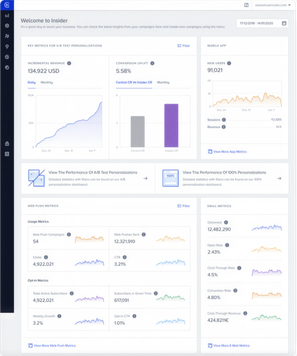
Insider One is an omnichannel customer-engagement platform that combines journey orchestration, personalization and AI-driven decisioning. It leans more heavily toward enterprise B2C use cases than the rest of this list, which is why it works here as an adjacent reference point.
What Makes It Stand Out
Agent One deploys autonomous AI agents for shopping help and customer support across web, WhatsApp and Instagram. The agents can make decisions, handle conversations and feed behavioral signals back into segmentation.
Architect, the journey orchestration canvas, joins SMS, email, WhatsApp and web channels into customer flows. Insider One also uses AI for audience segmentation, journey content, channel selection and send-time optimization. These capabilities make it relevant as an enterprise orchestration reference point, even though its strongest fit is B2C rather than B2B SaaS.
Insider One's Adidas case study reports an 18.8% increase in revenue per user from personalized recommendations and a 42.1% increase in profitability from returning users in a separate test. These are customer-specific case-study results, not general platform benchmarks.
Key Features
A unified CDP with warehouse-native links to Snowflake, Databricks, BigQuery and Redshift. Predictive, generative and agentic intelligence run throughout. Journey analytics and A/B testing update live. Native integrations span advertising, loyalty, CRM and analytics platforms.
Best For
Enterprise B2C brands in retail, travel and ecommerce that need omnichannel customer engagement at scale with autonomous AI decisioning.
Pricing
Insider Onedoes not publish a self-serve list price on its public product pages. Buyers need to request a demo or quote based on the channels and implementation scope they need.
11. Quantum Metric

Quantum Metric's Felix Agentic combines journey analysis, session context and automated investigation to explain what changed in the digital experience, why it changed and which users or business outcomes may be affected.
What Makes It Stand Out
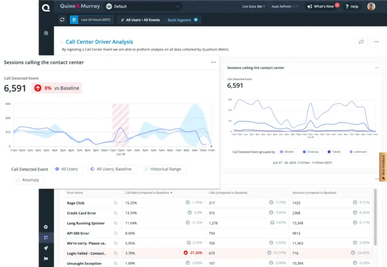
The platform pivots quickly from journey visualizations to contextual session replays. It enriches offline data sources with digital behavior. You can link call center data to website sessions and pinpoint the exact events that triggered support calls. Offline purchase uploads help tune digital experiences for in-store conversions.
Quantum Metric combines journey visualization, session replay and automatic experience-data capture so teams can move from a change in a KPI to the sessions and behaviors behind it.
Felix Agentic is Quantum Metric's AI analytics layer. Quantum Metric says it continuously investigates changes, gathers evidence and explains what changed, why it changed, who was affected and where the business impact appears.
Key Features
Session replay with AI summaries, heatmaps and journey visualization using Sankey and sunburst diagrams. Omnichannel data integration brings call logs and in-store purchases into the platform. Core Web Vitals monitoring, anomaly detection and customizable dashboards round it out.
Best For
Enterprise teams that need live issue detection tied to conversion optimization and customer experience monitoring across web, mobile and contact-center touchpoints.
Pricing
Quantum Metric uses custom enterprise pricing. The company does not publish a standard self-serve rate on its current product pages.
12. HockeyStack

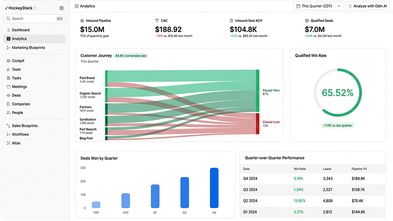
HockeyStack focuses on a common B2B problem: GTM data sits across CRM, paid media, website activity and sales systems. The platform connects those sources into buyer journeys, attribution and account intelligence.
What Makes It Stand Out
HockeyStack joins marketing and sales insight into one chronological, action-based view of every account's experience. B2B purchases involve multiple stakeholders over long cycles, and piecing the story together from disconnected tools wastes hours.
Its AI layer carries much of the analysis work. Odin answers GTM questions in plain English and generates reports. Nova works inside Salesforce to research accounts, build stakeholder maps and suggest next actions for reps. Both agents run on Atlas, HockeyStack's data foundation for connecting GTM sources and resolving identities.
HockeyStack's implementation documentation says teams can begin answering key business questions as quickly as 24 hours after connecting systems and defining funnel stages. That is a vendor-stated time-to-value target, not a guaranteed implementation time.
Key Features
Multi-touch attribution supports every model plus custom weighting and lookbacks. Account intelligence joins first-party CRM data with third-party behavior for transparent scoring. GTM workflow automation syncs audiences to ad platforms and sales tools. The no-code report builder lets marketers create custom analyses with no SQL.
Best For
B2B companies with multi-touch purchase cycles, existing GTM stacks like Salesforce or HubSpot, and marketing programs spanning paid media and content.
Pricing
HockeyStack's current public pricing page is sales-led and does not display a standard monthly list price. Pricing depends on the selected platform scope, data environment and add-ons.
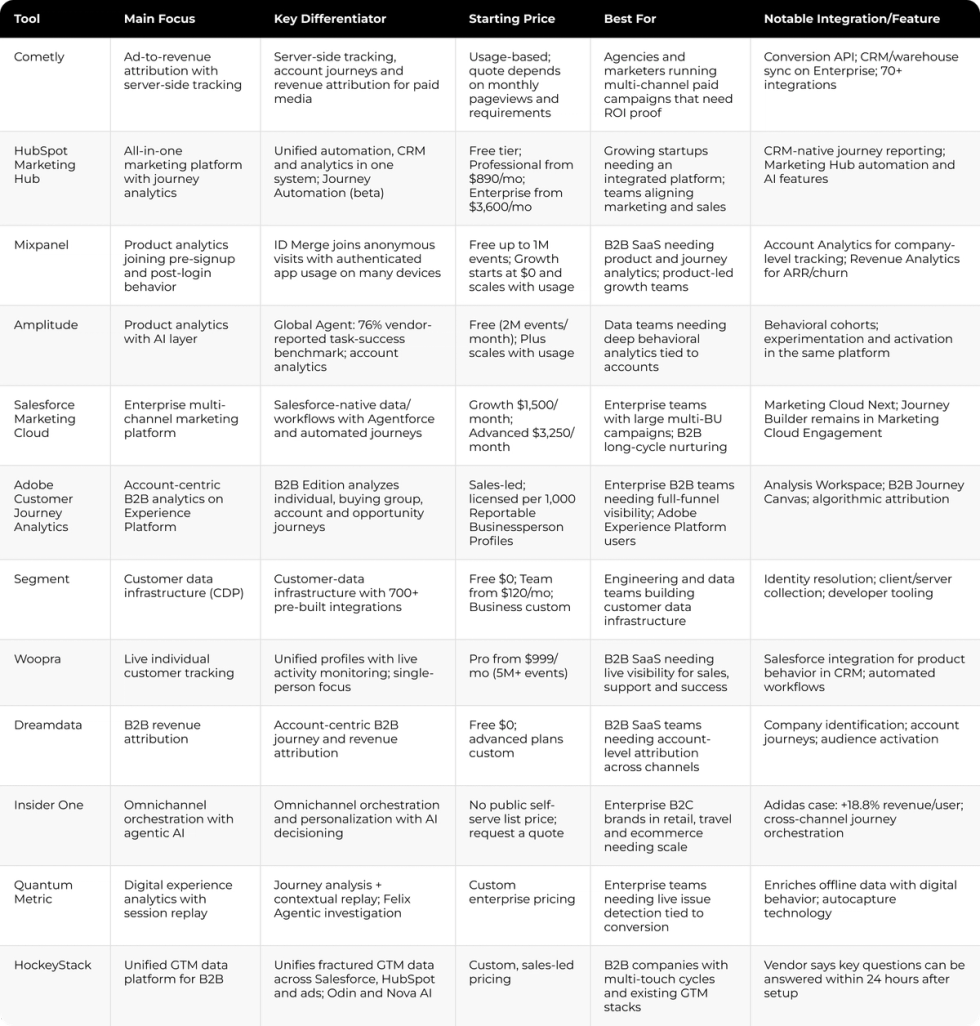
Comparison Table
How Darwin Can Help
Customer journey analytics software depends on reliable data, clean connections between systems, and a measurement model that reflects how your B2B funnel actually works.
Darwin helps B2B SaaS teams build that foundation. Our Data & Analytics work connects marketing, website, CRM, product and revenue data, improves the analytics architecture behind reporting, and gives teams a clearer view of the journey from first touch through pipeline and revenue. When the existing stack is fragmented, we can also help define what should stay, what needs to be integrated, and where a new analytics platform actually adds value.
Darwin Flux provides a structured way to find measurement gaps before they become reporting problems. That includes tracking and conversion signals, consent behavior, data quality, system handoffs and the connections that attribution and funnel reporting depend on.
At Wizehire, Darwin audited the paid funnel and sales process, expanded tracked conversion-relevant events from four to nine, reduced cost per lead by 26%, and shortened first response time from 2-4 hours to 15 minutes.
FAQs
Q1. What is the main difference between customer journey analytics tools and web analytics?
Web analytics tools like Google Analytics track traffic and page views at an aggregate level. Journey analytics tools follow individual behavior across websites, apps, emails and offline touchpoints and tie each activity to outcomes like revenue and retention. This creates a connected view of the customer path across sessions.
Q2. Why is server-side tracking important for B2B SaaS attribution?
Server-side tracking captures conversion data from your server and reduces reliance on browser-side signals that can be limited by ad blockers, privacy settings and platform privacy controls. It can preserve additional conversion signals and improve match quality when data is sent back to ad platforms. The size of the gain depends on your setup.
Q3. How does account-level analytics differ from individual user tracking for B2B?
Account-level analytics aggregates behavior across everyone in a company. B2B purchases involve several stakeholders across long cycles, so an account view shows the full buying committee's journey, flags the most engaged accounts and surfaces usage patterns that predict expansion or churn.
Q4. What should B2B SaaS teams prioritize when choosing a platform?
Start with your biggest data gap: connecting ad spend to revenue, understanding product usage or tracking multi-touch attribution across long cycles. Choose a platform built for that problem, and weigh how natively it fits your CRM, marketing automation and data warehouse, since native fit shortens time-to-value.
Q5. How quickly can companies see ROI from journey analytics tools?
Time to value depends on implementation scope and data readiness. HockeyStack says teams can begin answering key questions within 24 hours once integrations and funnel stages are configured, while enterprise suites usually require more setup and governance. The safer benchmark is how quickly the platform produces trusted decisions from your own data.